
Chimney fire damage claims in Illinois
A chimney fire can burn for a few minutes and leave cracked flue tiles, a warped damper and smoke through the house. The carrier often answers with two words: creosote and age. We are licensed Illinois public adjusters, and we build the evidence that the fire did the damage, then present the claim for you.
Before a sweep cleans the flue, ask for photos and a camera run of the inside. Cleaning removes the burned creosote that shows a fire happened.
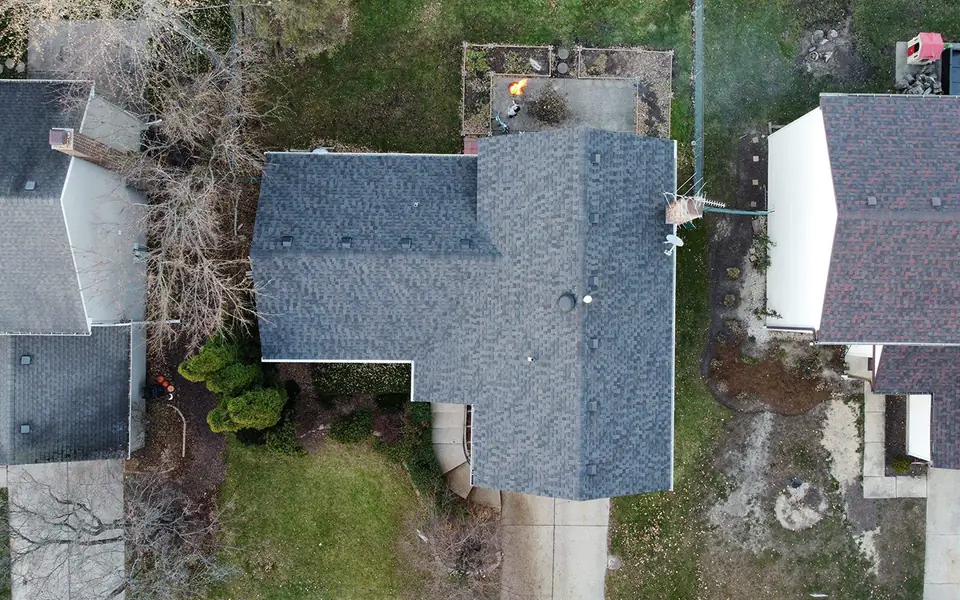
A masonry chimney from the top down, and what a fire inside the flue does to each part
- Cap and spark screenDiscolored, warped or burned through by heat coming out of the top
- CrownFresh cracks around the flue tile where it heated and swelled
- Clay flue linerTiles cracked, split down their length or with pieces missing
- Mortar joints between tilesJoints that opened under heat, letting smoke out through the brick
- Smoke chamberPuffy, honeycombed creosote where the fire started
- DamperWarped plate that no longer closes
- Firebox and hearthSoot on the face, cracked firebrick, smoke stains on the mantel
- Framing beside the chimneyCharring on joists and rafters in the attic or behind the wall
Fire mark or age mark: what decides a chimney claim
A homeowners policy pays for fire. It does not pay for wear, tear and slow deterioration. On a chimney the two sit side by side, and the carrier's inspector will put the cracks you show him on whichever side he can. The claim is won or lost on proof that separates them, part by part.
| Part | What a chimney fire leaves | What age leaves | What tells them apart |
|---|---|---|---|
| Flue tiles | Clean, sharp vertical cracks, often several tiles in a run, sometimes with pieces fallen to the smoke shelf | Rounded, eroded edges, white or brown water staining, crumbled tile near the top | A camera run of the whole flue, with the depth of each crack noted, and the fallen pieces kept |
| Creosote | Puffed up and honeycombed, like burnt cereal, with flakes on the roof and in the yard | A shiny glazed or flaky layer that has not been burned | Photos taken before sweeping, and a bag of the burned flakes |
| Damper and metal | Warped plate, bent frame, blistered paint on the throat | Even rust across the surface, a seized hinge | Close photos and a note of whether it closed before the fire |
| Crown and cap | Heat discoloration on the cap, a new crack ring around the tile | Moss, wide old cracks with dirt in them, spalled concrete | Roof-level photos the day after, with the date |
| Brick and joints | Soot lines showing through the mortar joints in the attic or a closet | Face bricks popping off on the weather side, sandy mortar | Photos from inside the house, where weather does not reach |
| Wood nearby | Charred joist ends, scorched sheathing beside the stack | Rot and water stains from a flashing leak | The fire department's report and attic photos before anything is cut out |
Eight shots to take before the sweep cleans the flue
The fire department puts the fire out and leaves. The next visit is usually a chimney sweep, and the first thing a sweep does is clean. Ask the sweep to record all of this first, then hold off on repairs until the carrier has seen it or agreed in writing.
- The top of the chimney from the roof
Cap, screen and crown, close and from a few feet back
- Burned creosote on the roof and ground
Flakes on the shingles, in the gutter and on the snow or grass
- The firebox and hearth
Soot on the face, the mantel, the wall above it
- Damper and smoke chamber
With a flashlight from below, before anything is brushed
- Camera run of the flue
The full video, top to bottom, and stills of every crack
- The attic beside the stack
Joists, rafters, insulation and the brick where it passes through
- Rooms with smoke
Ceilings, closets and furniture in the rooms around the fireplace
- Water from the hose
Wet ceilings, floors and carpet if the fire crew put water down the flue
The Chimney Safety Institute of America gives the same advice to fire departments: have the sweep photograph the damaged sections and the creosote before the chimney is swept, then run a video camera through the flue to check the tiles and joints. It also warns not to use the chimney until it has been swept and evaluated.
Two letters carriers send after a chimney fire, and how the file answers them
Nobody can promise how a carrier will rule. What we can do is make sure each objection is answered with something it has to respond to, line by line, instead of a phone call.
Letter one"The fire was caused by creosote buildup, which is a maintenance issue."
Is creosote buildup a reason to deny a chimney fire claim?
Creosote is what burns in almost every chimney fire, so its presence says how the fire started, not that fire is excluded. Fire is a covered peril in a standard homeowners policy. The question is what the policy itself excludes, so we read your exclusions word for word and quote them back.
Sweep receipts, a note of how often the fireplace was used and the date of the last inspection all go in the file.
Letter two"The flue tile cracks are long-term deterioration and are excluded."
Will insurance pay to reline a chimney after a fire?
When the fire cracked the liner, the repair of the liner is part of the fire loss, and a sweep may recommend relining the whole flue because single tiles deep inside the masonry cannot be reached. If some tiles were old and some cracked in the fire, the file shows which are which, with the camera run and the table above.
The repair bid has to say why the method is needed, not just its price.
A chimney fire claim is more than the chimney
The stack is the part everyone looks at. The money in the claim often sits in the rest of the house, where the carrier's first estimate may not go at all.
- Smoke in the rooms
- Soot on ceilings, in closets, in the ductwork and on clothes. Our page on smoke and soot damage claims covers how that cleaning is priced.
- Water from the fire crew
- Water put down the flue or onto the roof is part of the fire loss. See our water damage claims page for drying and hidden wet materials.
- Roof and flashing
- Shingles and flashing around the stack scorched by hot creosote, or broken by the crew on the roof.
- Attic and framing
- Charred wood beside the chimney, and insulation soaked or blackened.
- Contents
- Furniture, rugs and electronics near the fireplace, listed room by room before anything is thrown out.
- Living costs
- If the house cannot be lived in while it is repaired, the policy's additional living expense line may pay for a hotel or rental.
A lightning strike can crack a chimney too, and that claim runs differently, as our lightning damage claims page explains. On most policies the first check after a fire is the depreciated value, and the rest comes when the work is done, as set out in our guide to recoverable depreciation.
Questions homeowners ask after a chimney fire
Does homeowners insurance cover a chimney fire in Illinois?
Fire is a covered peril in a standard homeowners policy, and damage from a sudden chimney fire is usually claimed under it. Wear and slow deterioration are excluded, which is why the evidence has to tie each crack to the fire.
Is creosote buildup a reason to deny a chimney fire claim?
Creosote is the fuel in almost every chimney fire, so it explains how the fire started. Whether anything is excluded depends on the words of your policy, which we read and quote back to the carrier.
Should the chimney be swept before the insurance adjuster comes?
Not before it is photographed. Ask the sweep for photos and a camera run of the flue first, keep the burned flakes, and do not use the fireplace until the chimney has been checked.
Will insurance pay to reline a chimney after a fire?
When the fire cracked the liner, the liner repair is part of the fire loss. A sweep may recommend relining the whole flue, and the bid has to explain why that method is needed.
What does a chimney fire claim cost me?
Nothing at the start. We take an agreed share of the insurance money paid on this claim, written into our contract. If the carrier pays nothing, you owe us nothing.
Send us the chimney file for a free look
Fill in the four fields and we call you back. There is no charge to have us go through the sweep's findings and the carrier's letter with you. Homeowners rate our Lincolnshire office 4.9 from 33 Google reviews, which you can read on our reviews page, and we answer seven days a week.
- When the fire happened, and the fire department's report number if the crew gave you one
- Your homeowners policy, with the declarations page on top
- Whatever the sweep recorded: pictures, the flue video, a written note
- Any estimate or denial the insurer has mailed
Two checks Illinois gives you before signing with any adjuster
Under the rules of the Illinois Department of Insurance, a public adjuster needs a state license and a contract form the Director has approved. Call (866) 445-5364 to look up a license. If you change your mind, a certified letter sent within 5 business days of signing cancels the contract.