
Condo association insurance claims in Illinois
After a fire, a hailstorm or a burst riser, Illinois law puts the master policy claim in the board's hands. As public adjusters we document the whole building, price it and present the claim to the carrier for the association.
The check is our drawing. The quoted words are Illinois law, for a loss under the association's property policy.765 ILCS 605/12(g)
The order the law pays out the master policy money
The board cannot split the money among the owners who were hit hardest. Section 12(g) sets the order, and the next line gets paid only when the one above it is done. Here is a $900,000 payment run through it, with figures we made up to show the shape.
Damaged common elementsRoof, structure, shared systems, halls
$520,000Bare walls, ceilings and floors of the unitsThe surfaces the association has to restore
$310,000Improvements and betterments the association insuresOnly where it chose to insure them
$70,000Unit ownersOnly a surplus after every repair is complete
$0
Example only, not a figure from any claim. Your numbers come from the loss and the policy.
When an owner asks for their share of the check
The answer is in that last line: owners receive money from this policy only if some is left once the common elements and the units are fully restored, or if the association has ended as trustee. Secured parties, such as a unit's mortgage lender, share in the same trust.
What stays on each owner's own policy
Illinois law defines improvements and betterments as decorating, fixtures and furnishings added inside the unit, and the association does not have to insure them. Owners claim those, with their contents and hotel bills, on their unit policy. Our guide to condo and HOA losses is the one to send them.
Three ways the board can charge one $50,000 deductible
Section 12(c) gives the board these three routes for damage to a unit or the common elements. Take a 24-unit building where a pipe in one unit soaks six. Same deductible, three very different letters to owners. Shares here are equal to keep the sums plain.
Pay it as a common expense
About $2,083
from each of 24 units
The whole building carries it, usually through reserves or an assessment.
Assess the owner where the damage began
$50,000
from one unit
Allowed against owners who caused the damage or whose unit it came from, and only after notice and a chance for a hearing.
Require the affected units to pay
About $8,333
from each of 6 units
Owners who did nothing wrong pay because the water reached them.
Why owners' own policies come into this vote
An assessment lands on the unit policy's loss assessment line, and that base limit commonly starts around $1,000. Whichever route the board picks, tell owners early so they can report it to their own insurer.
What Illinois law leaves to the association's attorney
We are licensed public adjusters, not attorneys. The wording of your declaration, the hearing itself and any dispute over an assessment are questions for the association's attorney. Our part is the insurance claim.
What to put on the first board meeting's agenda after a loss
Board members are usually neighbors with day jobs. These six items cover what the carrier and the owners will ask for first.
Report the loss and approve emergency work
Tell the master policy carrier in writing, and approve what stops further damage: tarps, shut-offs, drying.
Bring the master policy, its declarations page and every invoice so far.
Settle what the association insures here
Section 12 covers the units' bare walls, floors and ceilings "except as otherwise determined by the board", so find out what your board has decided.
Bring the declaration and any board rule on unit boundaries.
Name one contact for the carrier
One officer or the property manager answers the carrier's letters, so requests and promises do not scatter across 24 inboxes.
Bring the carrier's first letter and the claim number.
Put the deductible route on the calendar
If the board may assess the owner where the damage began, notice and the hearing have to be scheduled first.
Bring the deductible from the declarations page. Wind and hail often has its own.
Write to the owners
Ask them to report to their own insurers, photograph their units before anything is removed and let contractors in through the manager.
Bring a list of affected units and who lives in each.
Write down the policy's dates, and who signs
Enter the proof of loss due date and the policy's suit limit in the minutes, and choose the officer who will swear to the figures.
Bring the policy's conditions pages. Our list of Illinois claim deadlines shows where to look.
How one signature page ended a $4.3 million hail suit
In November 2025 a federal judge in Chicago ruled against an Illinois condominium association over a July 2019 hailstorm. The court never decided whether the hail did the damage. The whole case turned on the notary page.
First proof of loss
$2.9 million
The association's president signed it in front of a notary, as the policy asked: signed and sworn.
SwornRevised proof of loss
$4.3 million
New construction figures raised the total. The earlier notarized signature page was copied and attached, so no notary ever swore the president to this number.
Not sworn, the judge heldWith no valid proof of loss, Section 143.1 of the Illinois Insurance Code did not pause the policy's two-year limit, and the suit came too late. The ruling is summarized by Merlin Law Group, and the association has appealed.
For a board, the habit is simple. When the figure changes, the officer signs again in front of a notary. Our article on the sworn proof of loss goes through the form line by line.
Building by building, for the whole association
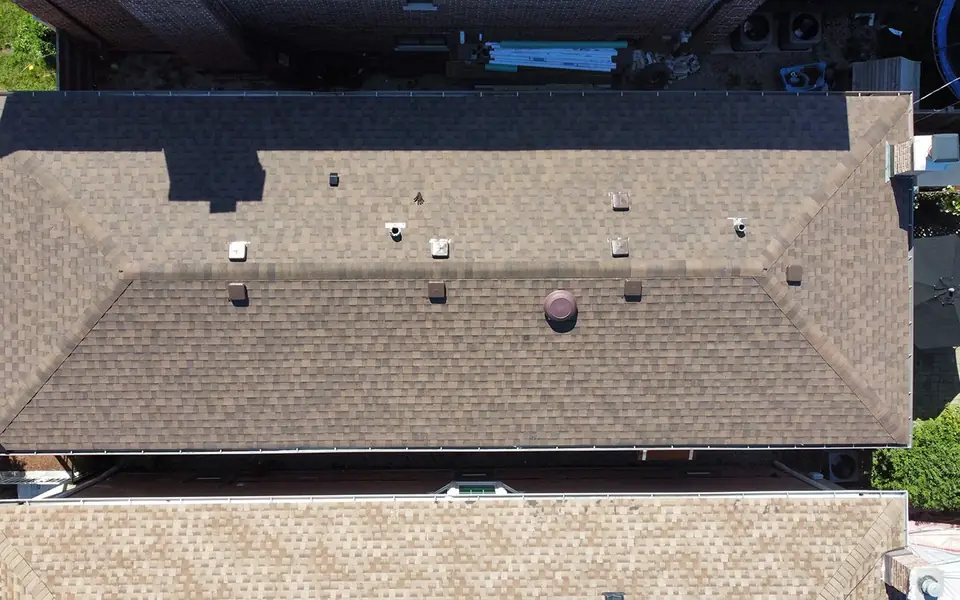
A complex with several buildings needs a scope for each one, so the roofs that look fine from the parking lot still get inspected and counted. On the file we build you will find:
- Every roof, slope by slope, with flat sections and rooftop units on their own lines
- Each wall of siding, with the walls the storm did not reach where matching is at issue
- Garages, entry canopies and other limited common elements your declaration assigns
- Code work, where Section 12 requires coverage to rebuild to current building codes
Flat roofs and rooftop equipment are covered on our commercial hail damage page. If a fire has emptied the building, large loss claims shows how the payments run.
Townhome and single-family associations
These usually fall under a different law, the Common Interest Community Association Act, and the State's guidance points the association to its own community instruments for what it must insure. We start there.
Ask for a review of the association's claim
We read the master policy and the carrier's letters free, and tell the board plainly where the claim stands. Rated 4.9 from 33 Google reviews, all on our reviews page.
- The date of the loss and the building addresses
- The master policy with its declarations page
- The declaration's insurance article
- The carrier's estimate and letters, if any have come
What the State tells you to check before the board signs
The Illinois Department of Insurance requires a public adjuster to hold its license and use a written contract approved by the Director. You can confirm a license at (866) 445-5364, and you can cancel by certified mail within 5 business days of signing. Minute the vote, so owners can see who approved the contract.
What boards and property managers ask us
- Do you handle condo association insurance claims in Illinois?
- Yes. We represent owners of multi-family property across Illinois, residential and commercial, and on a master policy claim the association is the party we work with.
- Can a unit owner file a claim on the association's master policy?
- A loss under the association's property policy is adjusted by and with the association, so that claim runs through the board. The owner claims on their own unit policy for what it covers.
- Who pays the deductible on a condo master policy in Illinois?
- The board chooses. It can pay it as a common expense, assess the owners who caused the damage or whose unit it came from after notice and a chance for a hearing, or require the affected units to pay.
- Can a unit owner get part of the insurance check?
- Only from a surplus. The money goes first to the common elements, then the units' bare walls, ceilings and floors, then any improvements the association insures.
- What does an association claim cost the association?
- The association pays nothing at the start. We take a percentage of the money the carrier pays on this claim, as written in the contract your board approves. No recovery means no fee.